Escape‑Proofing Your ‘Houdini’ Cat: Fence Extensions, Arch Bars and Netting Options in Victoria
A practical guide for Victorian cat owners on choosing and preparing for arch bars, fence extensions or house‑to‑fence netting so determined cats can’t get out—what each option does, how installations fit existing fences, and the questions to ask your installer.

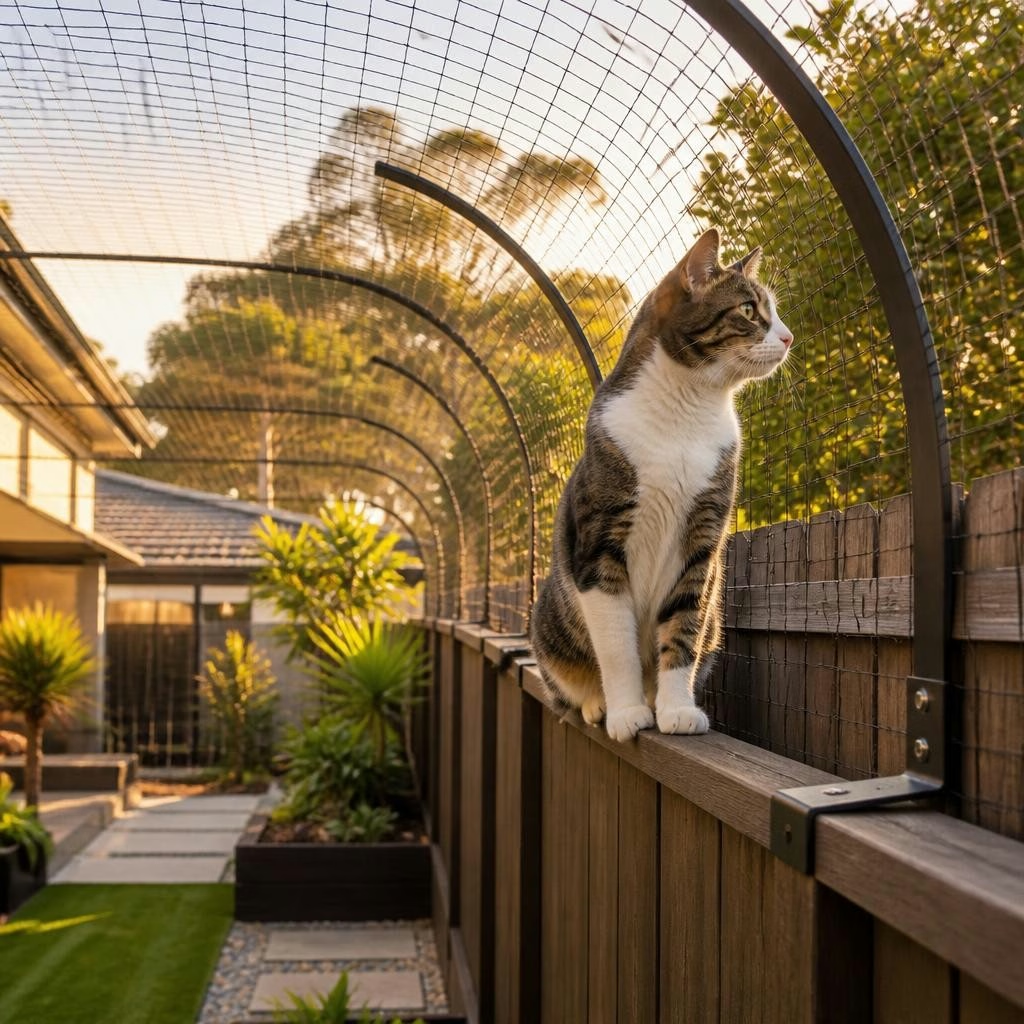
Why escape‑proofing matters for jumpers and climbers
Some cats are natural explorers: they jump, climb or vault fences to chase birds, visit neighbours or simply patrol a larger territory. Beyond the obvious risk of traffic or fights, escapes cause stress for owners and for the cat. If you’re noticing frequent attempts at the top of the fence, repeated successful escapes, or your cat using narrow ledges or posts as launching points, it’s time to consider a targeted escape‑proofing solution rather than hoping behaviour will change on its own.
Overview of the three main solutions
There are three common ways to stop determined cats: arch bars (also called anti‑escape arches), fence‑top extensions (angled or vertical additions to existing fencing) and house‑to‑fence netting systems. Arch bars add curved barriers that make it hard for a cat to gain purchase at the top. Extensions increase the height or change the angle of the run‑out so jumping or climbing becomes impractical. Netting converts a yard or side passage into a contained space with low visual impact when installed carefully. Each approach has trade‑offs in appearance, cost and suitability for different fences and cats.
When to choose arch bars
Arch bars suit properties where you want a discreet, low‑profile solution for a fence that cats are launching from. They’re particularly useful on solid or paling fences where attaching an angled barrier provides a mechanical deterrent without enclosing the entire yard. Arch bars work well for single‑cat households or where neighbours’ cats aren’t able to get into the same space. If your cat is a nimble climber but the yard is otherwise secure, arch bars are a practical first option.
When fence extensions make sense
Fence extensions—either vertical or angled upwards—are ideal when you need to increase effective fence height along a run or create a continuous deterrent around the perimeter. They’re a good choice for multi‑cat homes, breeders or yards with multiple escape points. Extensions are robust and often integrated into the existing fence structure, which can make them more long‑lasting. Customers often ask for extensions when their cat has already learned to negotiate lower or wobbly additions and a stronger, custom solution is required.
When house‑to‑fence netting is the best fit
House‑to‑fence netting systems turn your outdoor area into a netted enclosure, connecting the house and fence to create a continuous barrier. This is the preferred option when you want full outdoor freedom for your cat with minimal gaps—particularly useful on side passages, balconies, or irregular yards. Well‑installed netting can be low‑visibility and blend with the property. It’s commonly used when owners want a larger usable outdoor area or when many small escape routes make point solutions impractical.
How installations work on existing fences
A careful installer will survey the fence line, check posts, measure irregularities and plan fixings that minimise damage. Typical steps include assessing fence material (paling, masonry, metal), locating strong anchoring points, and designing brackets or frames that tie into the fence or the house. Good installations aim for tidy finishes and minimal mess; customers frequently comment on prompt, clean work and attention to detail. If you have fragile or graded fencing, raise that at the site visit—experienced builders adapt their methods to protect what’s already in place.
Questions to ask before you hire an installer
Prepare a short checklist for quotes: ask which option they recommend for your cat’s behaviour and your fence type, how they anchor fixings and whether any fence repairs are needed first, estimated timeframe from quote to install, and what materials will be used (UV‑stable netting, galvanised fixings, weather‑rated timber/metal). Also ask about cleanup, how the work will affect neighbours or access, and whether they can include perches or run connections if you want your cat to travel along fence lines. Reviews of local installers often highlight that clear communication and tailored solutions make the biggest difference.
Preparing for installation and basic aftercare
Before the team arrives, clear the fence line of potted plants and outdoor items and ensure access around the yard. Expect some short‑term disruption on the install day, but reputable teams tidy up and leave the site usable. After installation, keep an eye on tensioned netting or fixings for the first few weeks and check posts after heavy weather; occasional tightening or re‑anchoring can extend life significantly. Many owners report peace of mind once a professional, custom solution is in place—and small additions like elevated perches or fence‑top pads can make the space more attractive to your cat and reduce escape attempts.
Article by
Elite Cat Enclosures
Our custom built outdoor cat enclosures are often quoted by our customers as being the best in Melbourne – please see our testimonials!. We use a variety of high quality materials to make sure our cat enclosures last. Our builders boast over 15 years of commercial building experience in a variety of custom constructions. If there is a job which requires specialist knowledge then we can provide the necessary skills.